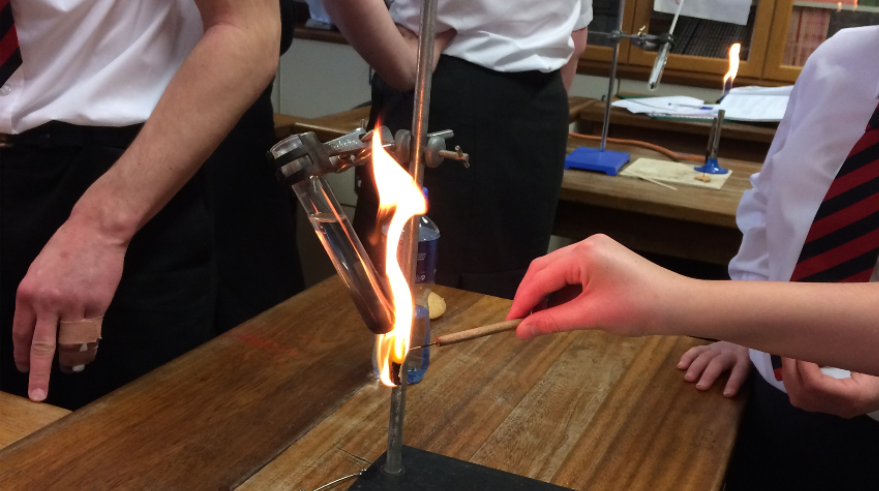
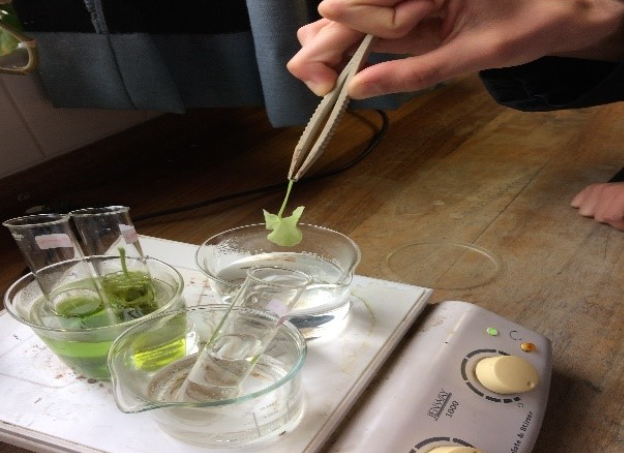
Biology is a fascinating subject which involves the study of living organisms. As biologists, we study a diverse range of areas, such as microbes, how organisms are classified and how different species interact with each other and the natural environment. Through these studies we may find solutions to worldwide problems such as Global Warming, food shortages and MRSA. Biologists are also involved in researching and understanding some of the most controversial advances in human knowledge including designer babies and genetically modified food.
The study of Biology aims to help us understand the world we live in today and this allows us to make a difference to our tomorrow’s world.
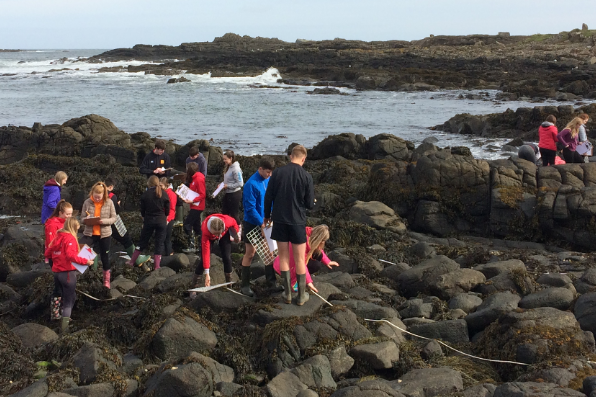
Key Stage 3
Pupils study Science in Years 8 and 9 in mixed ability classes, where they are introduced to a range of biological topics, including Cells, Reproduction, Classification and Photosynthesis. Biology is then taught as a separate discipline in Year 10.
Key Stage 4
Students select to continue their study of Biology at either Triple Award, Double Award or Single Award. GCSE encourages students to develop their curiosity about the living world and provides insight into and experience of how science works. It also inspires, motivates and challenges students, enabling them to engage with Biology in their everyday lives. They learn about cells, living processes, biodiversity, body systems, genetics, microorganisms and health.
For those progressing directly into employment, a GCSE in Biology is relevant not only to the fields of science and medicine, but also to areas of commerce and public service that value problem-solving and practical skills. This course prepares students for the study of Biology and related courses at A Level. It also helps them to develop transferable skills that will benefit them in vocational training and employment.
A-Level
Post 16, the continued study of Biology comprises of two levels: AS and A2. AS comprises of 3 units undertaken in Year 13 covering a diverse range of topics such as macromolecules, the ultrastructure of cells and biodiversity as well as developing hands-on practical skills. 3 further units comprise A2 which is completed in Year14. A2 Biology students study more challenging topics such as the biochemistry of respiration and photosynthesis, gene technology and ecosystems coupled again with practical work including extraction of DNA and dissections.
Specific detail of the A Level Biology specifications can be found on the CCEA website via the following link https://ccea.org.uk/downloads/docs/Specifications/GCE/GCE%20Biology%20%282016%29/GCE%20Biology%20%282016%29-specification-Standard.pdf
A Level Biology encourages students to:
develop an interest in and enthusiasm for Biology (including an interest in further study and biology-related careers);
develop knowledge and understanding of different areas of the subject and how they relate to each other;
develop and demonstrate a deeper appreciation of, and understanding of, how science works;
appreciate how society makes decisions about scientific issues; and
understand how the sciences contribute to the success of the economy and society.
Extra-curricular
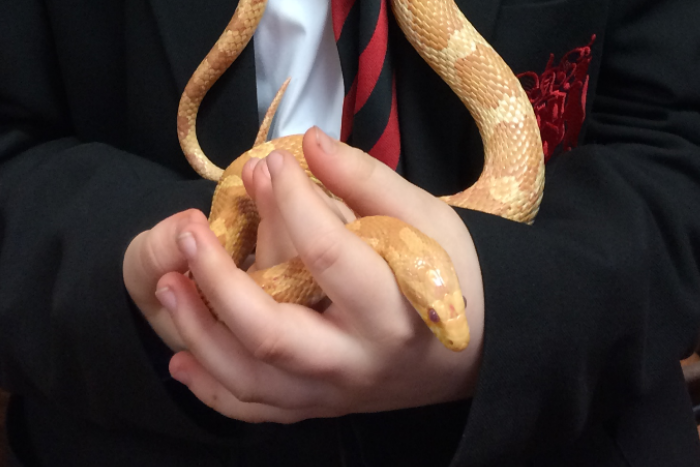
The Biology department’s Animal club continues under the expert support and guidance of our Biology technician. Numerous enthusiastic junior pupils come to spent time and assist with the care of our numerous animals. We currently have 2 guinea pigs and a corn snake.